

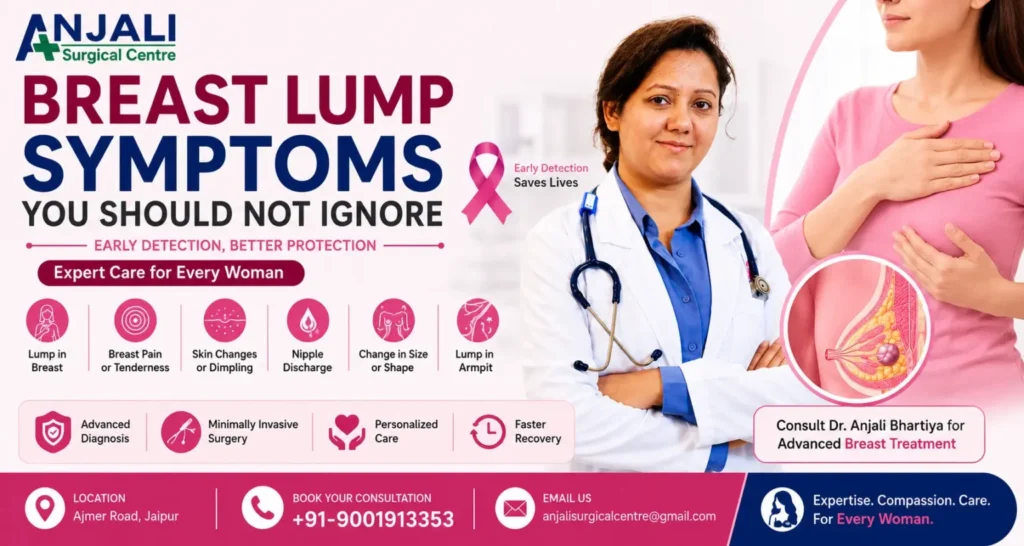
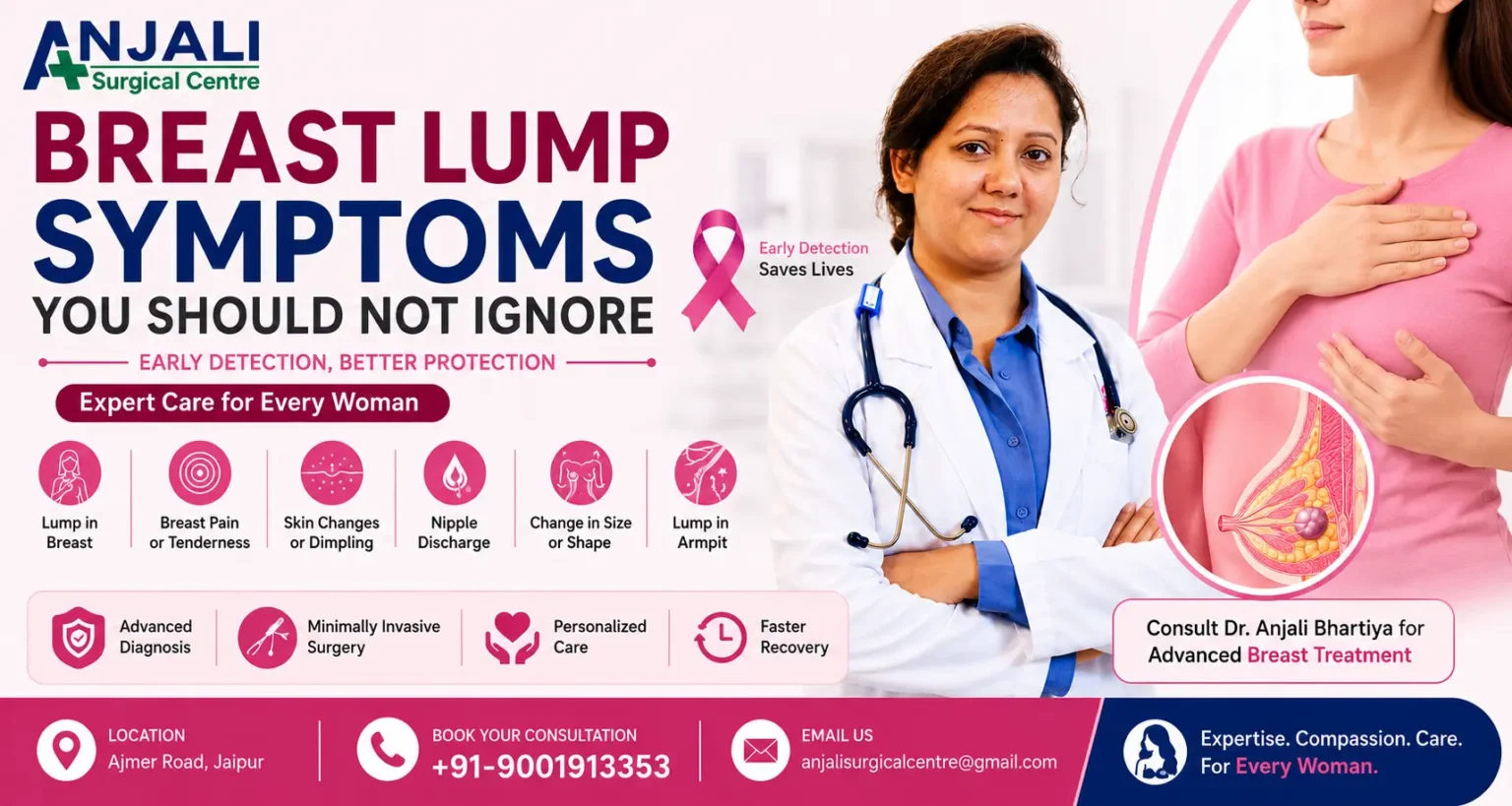
Breast lumps are common in women and may occur due to hormonal changes, cysts, infections, or other breast conditions. While many breast lumps are non-cancerous, some symptoms should never be ignored. Early diagnosis plays a major role in successful breast treatment and better health outcomes.
If you notice unusual breast changes, consulting an experienced breast doctor or breast surgeon is important for accurate diagnosis and timely treatment.
What is a Breast Lump?
Understanding Breast Lumps
A breast lump is an abnormal swelling or thickened tissue that develops inside the breast. Some lumps are painless, while others may cause discomfort or tenderness.
Not every breast lump is linked to breast cancer, but every persistent lump should be examined by a specialist.
Breast Lump Symptoms You Should Never Ignore
Visible or Palpable Lump
Lump in Breast Female
A noticeable lump or thickened area inside the breast is one of the most common warning signs.
Persistent Breast Pain
Painful Breast Lump
Pain that does not improve or becomes worse over time should be medically evaluated.
Breast Swelling or Skin Changes
Redness or Skin Dimpling
Changes in skin texture, redness, or dimpling may indicate underlying breast disease.
Nipple Discharge
Abnormal Fluid from Nipple
Bloody or unusual nipple discharge should never be ignored.
Changes in Breast Shape or Size
Uneven Breast Appearance
Sudden changes in breast size, shape, or contour require immediate consultation.
Lump Under the Armpit
Swollen Lymph Nodes
A lump near the underarm area may sometimes be associated with breast conditions.
Common Causes of Breast Lumps
Non-Cancerous Causes
Fibroadenoma Breast Lump
A common benign breast lump usually seen in younger women.
Breast Cyst Lump
Fluid-filled cysts may become tender during hormonal changes.
Hormonal Breast Changes
Hormonal fluctuations during periods, pregnancy, or menopause can affect breast tissue.
Breast Infection
Mastitis or Inflammation
Infection may cause pain, redness, fever, and swelling.
Breast Cancer
When a Lump Needs Urgent Attention
Certain symptoms may increase concern for breast cancer, including:
- Hard fixed lump
- Skin dimpling
- Nipple inversion
- Persistent breast pain
- Family history of cancer
Early detection improves treatment outcomes significantly.
Breast Lump Diagnosis
Physical Examination
Clinical Breast Evaluation
An experienced breast doctor checks the lump’s size, texture, and movement.
Imaging Tests
Breast Ultrasound
Useful for differentiating cysts from solid lumps.
Mammography
Important imaging test for breast evaluation.
Biopsy
Tissue Examination
A tissue sample may be taken if further testing is needed.
Breast Treatment Options
Monitoring Benign Lumps
Observation & Follow-Up
Some non-cancerous breast lumps only require regular monitoring.
Medication & Lifestyle Changes
Symptom Management
Pain relief and hormonal management may help certain breast conditions.
Surgical Breast Treatment
Breast Surgery for Lump Removal
Surgery may be advised for suspicious, painful, or cancerous lumps.
Modern breast surgery techniques focus on safety, precision, and faster recovery.
Why Choose Dr. Anjali Bhartiya?
Expert Breast Care in Jaipur
Experienced Breast Specialist
Trusted expert for advanced breast treatment and breast lump diagnosis.
Personalized Treatment Plans
Customized care according to patient condition.
Advanced Diagnostic Support
Focus on accurate and early diagnosis.
Comfortable Consultation Environment
Supportive and confidential care for women.
Contact Details
Book Your Consultation Today
Location
Jaipur
Phone Number
+91-9001913353
Email Address
anjalisurgicalcentre@gmail.com
Final Thoughts
Ignoring breast lump symptoms may delay diagnosis and treatment. While many breast lumps are non-cancerous, some symptoms require immediate medical attention. Consulting an experienced breast surgeon or breast doctor helps ensure timely diagnosis and appropriate care.
With expert support from Dr. Anjali Bhartiya, women can receive advanced breast treatment, compassionate care, and accurate breast lump evaluation in Jaipur.
Q1. Are painful breast lumps always cancerous?
No, many painful breast lumps are related to cysts, hormonal changes, or infections rather than cancer.
Q2. When should I worry about a breast lump?
You should seek medical evaluation if the lump persists, grows, becomes painful, or causes skin or nipple changes.
Q3. Can breast lumps appear during pregnancy?
Yes, hormonal changes during pregnancy and breastfeeding may lead to breast lumps or swelling.
Q4. What tests help diagnose breast lumps?
Common tests include breast examination, ultrasound, mammography, and biopsy.
Q5. Is surgery necessary for all breast lumps?
No, surgery depends on the diagnosis, symptoms, and whether the lump is benign or suspicious.
Q6. Can young women develop breast lumps?
Yes, breast lumps can occur at any age and are often benign in younger women.