

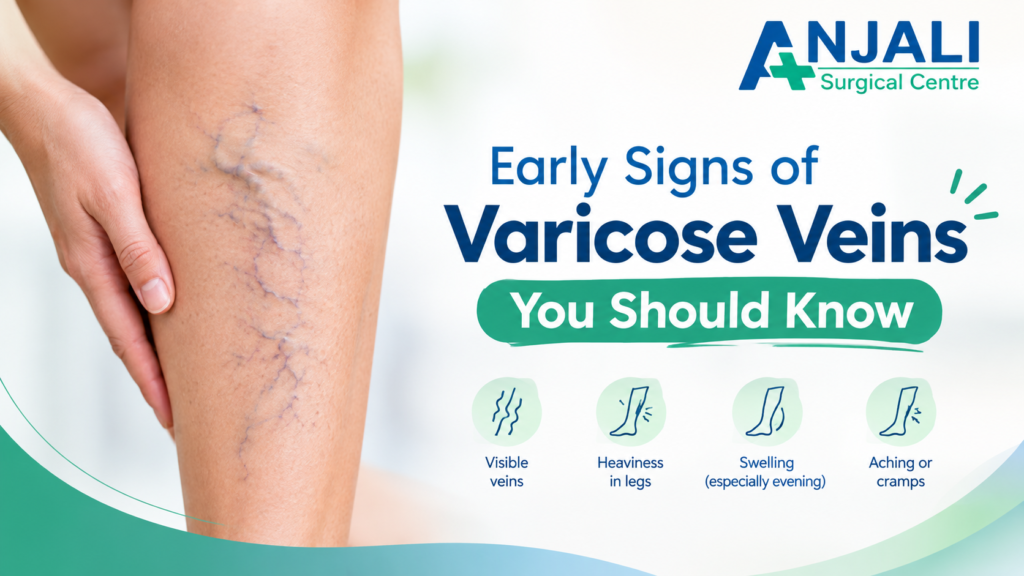
Early Signs of Varicose Veins You Should Not Ignore
Varicose veins develop slowly, and some of the symptoms they cause can be mild and unnoticeable. However, it is essential to pay attention to the signs and consult a physician as soon as possible to prevent the condition from worsening.
1. Varicose Veins: Blue or Purple Veins on Legs
One of the first and most evident signs of varicose veins is the appearance of blue, purple, or dark veins on legs. They can also look like swollen blood vessels that turned out to be twisted or bulging . These veins are usually observed at the calves, at the back of the thighs and legs, and around the knees. At first, they may be too small and barely noticeable; however, one should keep track of any changes in their appearance.
2. Heaviness in Legs and Calves
Another symptom of varicose veins is the feeling of heaviness, fatigue or even soreness in legs that may extend to the calves. One may experience these symptoms mainly after standing or sitting for a long time. his condition tends to occur at night and rarely extends beyond the legs unless there is an associated disease.
3. Throbbing and Aching Pains in Legs and Calves
Varicose veins often cause a throbbing, achy, or dull leg pain that usually appears in the calves or near the swollen veins. The discomfort can also be persistent or intermittent and become more prominent after standing.It is essential to pay attention to these pains because they are frequent in people with venous disease. However, leg pain can also occur due to multiple reasons unrelated to varicose veins. If the pains in the lower limbs and calves are constant and happen regularly, one should consult a physician to learn what condition causes them.
4. Swelling of the Ankles and Legs
Varicose veins may lead to fluid buildup in the tissue around the ankles and legs, causing them to swell. As a result, the legs and ankles may begin to hurt and feel uncomfortable when moving.
he swelling can become more apparent after standing or sitting for an extended period. Although it is normal for legs to swell occasionally, they should return to normal in size after resting or elevating them. If the legs remain swollen even after several hours, one should consult a physician.
5. Itching in the Area of Varicose Veins
Itching occurs because of the changed appearance of the skin due to the dilation of capillaries. It can also happen in places where one can observe the veins’ redness and swelling. It is crucial to determine whether this sensation is connected to varicose veins or appears independently. The symptoms accompanying this condition may vary from scratchiness to skin irritation. Moreover, one should consult a physician if these unpleasant sensations are observed frequently.
6. Leg Cramps at Night
Varicose veins often cause night leg cramps, particularly in the calves. These cramps are usually described by people as sharp, sudden pains in one or both legs. When they occur, one may also feel a muscle spasm or hardening. It is important to differentiate these cramps from the ones caused by other conditions, such as tetany or nocturnal leg cramps. Nevertheless, if people experience these unpleasant sensations often, they should consult a physician.
7. Burning and Tingling in Legs
A burning sensation in the legs, particularly at night, is another symptom of varicose veins. This unpleasant feeling usually appears when one keeps their legs in one position for too long. Furthermore, it often goes away after walking or exercising.It is usually accompanied by tingling and numbness, which make it difficult for people with this condition to put any load on their legs. This symptom occurs because of the improper functioning of the veins, which causes circulation issues. People with varicose veins may also experience the leg heaviness and numbness, especially after being too long in one position (sitting or standing).
One should consult a physician if they observe any of the symptoms described above. Moreover, they should seek medical attention if one leg starts to swell, particularly if it is warm and red. In this case, it is vital to consult a physician because the situation can be extremely dangerous and indicate a deep vein thrombosis.
Contact Us
Phone No – +91-9001913353
Email – anjalisurgicalcentre.com